
Let's stop acting. The old-fashioned way of doing SEO is dead.
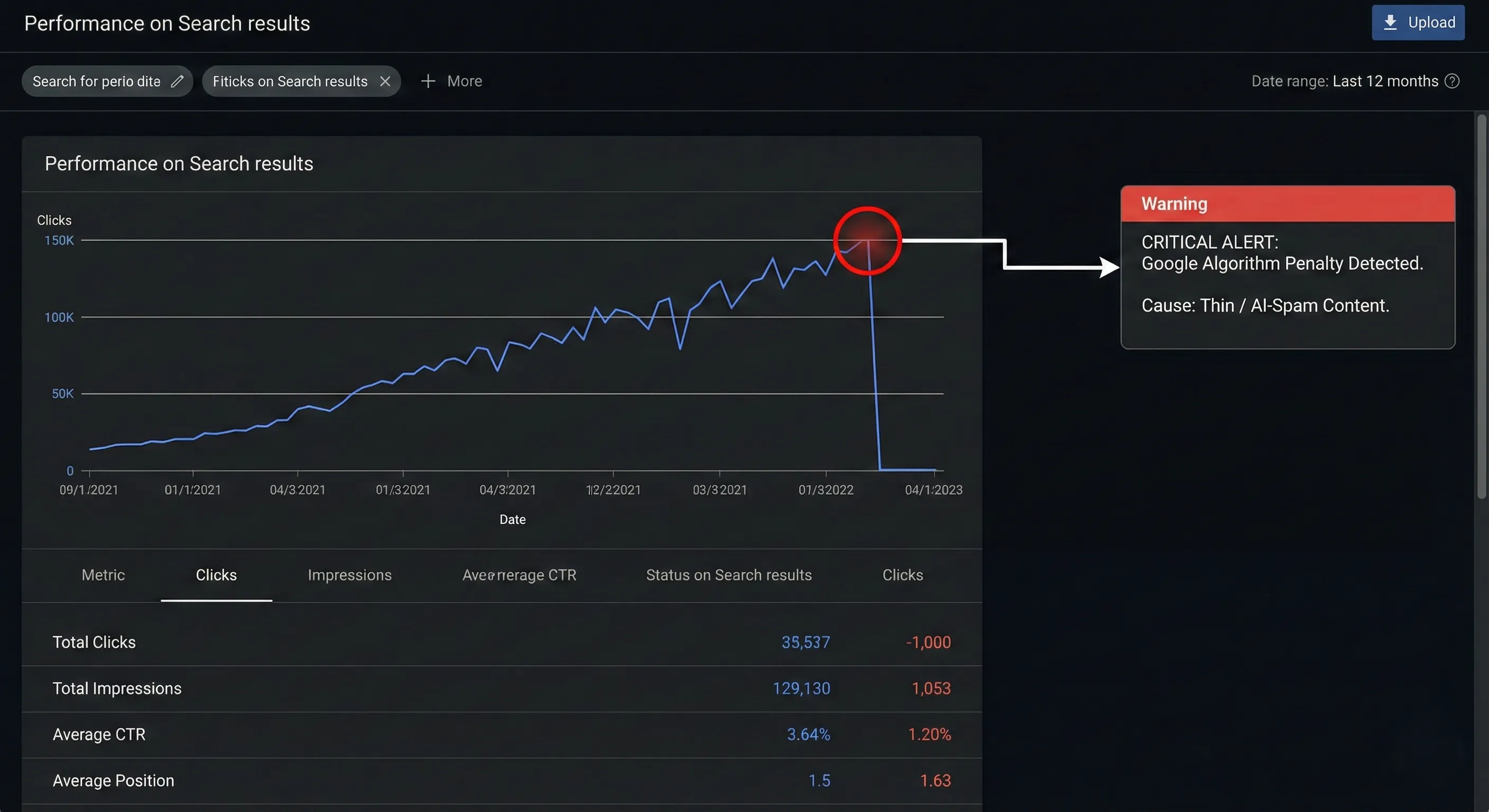
If your marketing agency is telling you to "post 50 AI articles every month" or "shove in more keywords" so that your Greater Noida real estate or tech business ranks, tell them simply: Thank you, goodbye. They're setting your digital presence on a time bomb.
Google's new automated ranking systems have one rule: Destroy content written for search engines, and reward content written for people. At Deeplink Creators, we don't chase loopholes. We create digital assets. Here's the truth, without sugarcoating it, about Google's E-E-A-T framework and how you'll need to adapt if you want to survive the algorithm's cleaning up process.
The Death of “Search Engine-First” Content
Google has clearly stated: Creating content solely to manipulate rankings = a violation of the spam policy.
Now ask your website some tough questions:
Are you simply rewriting competitors' content, without adding any new ideas of your own?
Are you creating generic content simply because it's a "trending keyword"?
Does your content seem rushed, mass-outsourced, or careless?
If the answer to any of these is "yes," then Google's bots have already figured it all out. You're not making the algorithm smarter, you're destroying your brand's credibility.

New Currency: E-E-A-T
Now Google doesn't just read words, it measures trust. To do this, it uses the E-E-A-T framework:
Experience: Has the content writer actually used the product or worked in the market?
Expertise: Does he or she have the knowledge or qualifications?
Authoritativeness: Is the business considered a leader in its industry?
Trustworthiness (most important): Is the site secure, transparent, and provides accurate information?
Warning for High-Ticket Businesses: If your business is related to people's money or safety (e.g., real estate, finance, legal), Google puts you in the YMYL category. Here, a weak E-E-A-T doesn't just mean a low rank, it means a complete failure.
The “Who, How, Why” Blueprint
To show Google your E-E-A-T, your website must clearly answer three questions:
1. Who created the content?
Blogs without faces appear suspicious to Google. The author's name, background, and expertise should be visible on every page.
2. How was it created?
Did it use AI or automation? Google doesn't create AI, but it demands honesty. If you used AI, tell us. If you wrote a case study, show where the data came from. Show proof.
3. Why was it created?
This is the biggest test. Was this page written to help someone make a decision worth lakhs? Or just to rank for "Buy flats in Noida"? Intent matters. If the goal is simply to manipulate traffic, then a penalty is certain; it's just a matter of time.
The Standard of Deeplink Creators
Deeplink Creators doesn't believe in cheap hacks. We combine data science with neuro-marketing to create authoritative brands that rank because they deserve to.
We audit your site, inject real expertise, build a strong technical foundation, and create an E-E-A-T profile that's hard to break.
Stop gambling with your enterprise value. Build authority.